Citronella vs Lemongrass Oil: Key Differences for Buyers
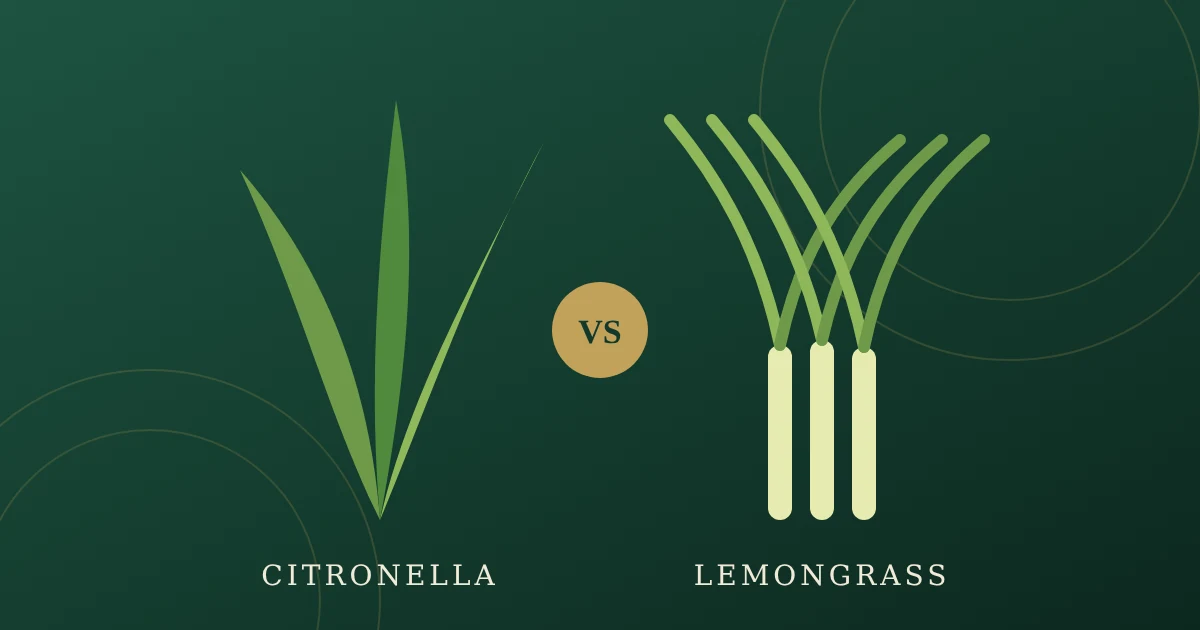
Citronella and lemongrass are both lemony grass oils, and buyers often confuse them. They come from different plants, contain different key compounds and suit different products.
Two grasses, two profiles
Java-type citronella oil comes from Cymbopogon winterianus and is built on citronellal, geraniol and citronellol. Lemongrass oil comes from Cymbopogon citratus and related species and is dominated by citral, a blend of geranial and neral.
| Java citronella | Lemongrass | |
|---|---|---|
| Botanical source | Cymbopogon winterianus | Cymbopogon citratus and related species |
| Key compounds | Citronellal, geraniol, citronellol | Citral (geranial and neral) |
| Aroma | Fresh, green citrus with a rosy note | Intense, clean lemon |
| Typical uses | Home care, soap, candles, repellents | Fragrance, soap, home care, flavour |
| Also a raw material for | Citronellal and related aroma chemicals | Citral and aroma chemicals such as ionones |
How to choose
- Choose citronella for a fresh, green, slightly rosy citrus note, or as a source of citronellal.
- Choose lemongrass for a strong, clean lemon note or a high citral content.
- For repellent or household formulas, citronella is the classic choice, but always test a sample in your own base.
Java type vs Ceylon type
Citronella oil is also produced from Cymbopogon nardus, known as the Ceylon type, which has a different composition. State clearly which type you need when you order.
What to specify when ordering
- The oil and the species or type
- Minimum citronellal or citral percentage
- A Certificate of Analysis for the lot
- Quantity and packing
Not sure which grass oil fits your formula? Tell us the oil, grade, volume and destination and we will reply with availability and pricing.
Ask our teamRelated reading: Citronella oil Lemongrass oil How to read a CoA